



America's End-to-End Natural Flake Graphite Producer
Advancing U.S. critical minerals independence with robust project economics and strong federal backing
$513M After-Tax NPV
7% Discount Rate
37% After-Tax IRR
2.7-Year Payback
$125M+
Federal EXIM Backing
40,000 tpa
Production Target
653,000 tonnes
Contained Graphite
Q4 2025
Demo Production Start
The preliminary economic assessment is preliminary in nature, it includes inferred mineral resources that are considered too speculative geologically to have the economic considerations applied to them that would enable them to be categorized as mineral reserves, and there is no certainty that the preliminary economic assessment will be realized. Mineral resources that are not mineral reserves do not have demonstrated economic viability.
Overview
Strategic Positioning
Stage
Project
Location
Gouverneur, New York
The Kilbourne Graphite Project represents a transformational opportunity to re-establish domestic natural flake graphite production in the United States. The Kilbourne Graphite Demonstration Facility, which began processing in December 2025 and produced its first concentrate in January 2026, is America’s first end-to-end producer in over 70 years. Located at Titan's 100%-owned Empire State Mine complex (“ESM”) in St. Lawrence County, New York, Kilbourne benefits from existing operational infrastructure, a skilled workforce, and state-level permitting, providing a significant competitive advantage over greenfield graphite projects.
Kilbourne Graphite Project – Permitting & Community Updates
Location Map
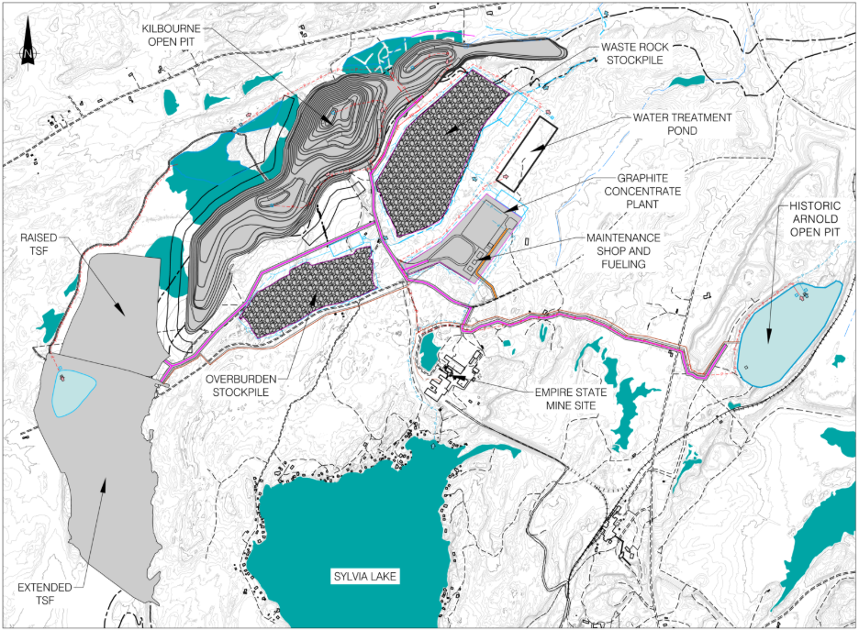
Location & Infrastructure
Unique Operational Advantages
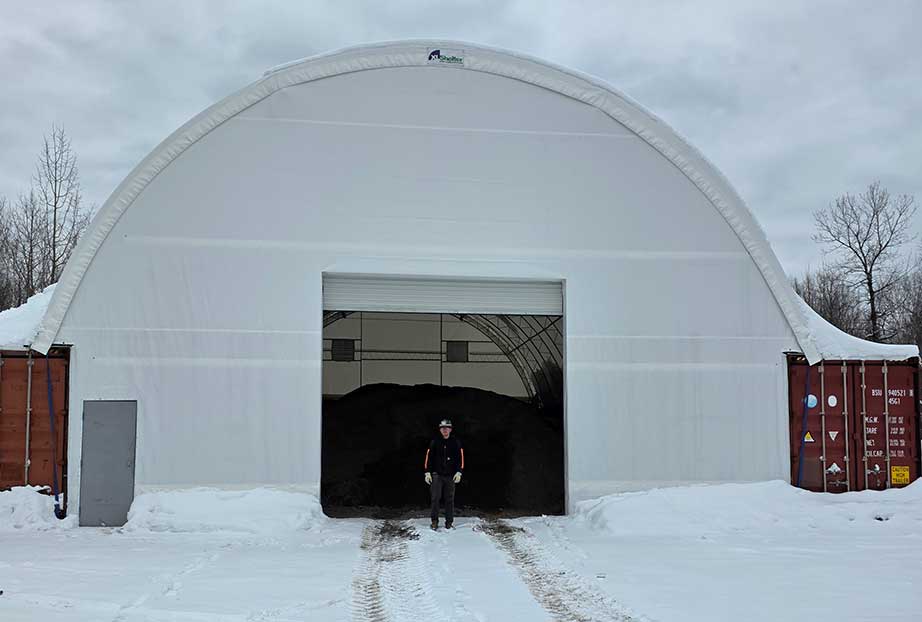
Existing Infrastructure: The Kilbourne project is located within the ESM package and will include the open pit mine, tailings management facilities, a Concentrate Plant, and a Micronization Plant. As part of this vertically integrated model, Primary Mill Feed extracted from Kilbourne open pit mine will be processed at the Concentrate Plant and subsequently micronized at Kilbourne Site. Another site in New York is under consideration for building the secondary transformation facility.
Workforce: At full production, the mining segment will employ approximately 62 skilled professionals, while the Concentrate Plant will support 58 employees across operations, maintenance, and technical services, totalling a peak workforce of about 120 people. A total workforce of 16 workers is required to operate the two micronization systems, 40 employees are required for the Purification Plant, while 88 employees are required for the CSPG Plant. The project's total employment potential is over 260 people. Today, our workforce is nearly 100% local, reflecting our commitment to supporting the community.
Land Position: Titan maintains a comprehensive land position anchored by its existing zinc operations at the Empire State Mine complex in St. Lawrence County, New York. This strategic footprint provides a strong foundation for the Kilbourne Graphite Project, leveraging established infrastructure and operational advantages.
Permitting: The Kilbourne Graphite Project benefits from its location within an existing, fully permitted mining complex, streamlining certain aspects of development. The proposed open pit will require permitting under the mining permit regime. Other operational permits are also required, which are ordinary course permits. Permitting efforts are underway, with baseline studies and monitoring programs initiated to support timely approvals. As Kilbourne is under consideration for federal funding, it has also been accepted into the FAST-41 program to streamline required federal permits to a 14-month timeline.
Highlights
Critical Materials Complex: Titan’s Empire State Mines in New York State is evolving into a multi-metal critical materials complex, anchored by zinc and graphite, with germanium testing underway that could further strengthen the site’s role in U.S. defense and semiconductor supply chains.
Robust Economics: After Tax NPV (7%) for the stand-alone Kilbourne Graphite Project of $513 million, post-tax IRR of 37%, and 2.7-year payback, confirming Kilbourne to be the highest return graphite project in the USA.
High Margins: Average EBITDA of $125 million through LOM. Blended EBITDA margins of 58-69% supporting resilient returns across market cycles.
Scale & Impact: Average production of ~40,000 metric tonnes per annum of graphite concentrate, at nameplate capacity, nearly 50% of current U.S demand, from an integrated operation in New York State.
Expanded United States Government partnership:
EXIM has approved an additional $5.5 million of non-dilutive funding under the MMIA program (by way of the EMP Program), on similar terms as previously announced, to accelerate resource drilling, metallurgical test work, and engineering work programs for the Feasibility Study. This is the first Feasibility Study for a domestic project funded by EXIM, underscoring the strategic importance of fast-tracking Kilbourne.
EXIM has also issued a $120 million LOI expected to cover the majority of the construction capital, materially de-risking financing and underscoring the Project’s strategic role in U.S. national security and defense supply chains.
Capital Efficiency: Initial construction capital of $156 million, leveraging existing Empire State Mine infrastructure, government financing programs, and cash flow from Titan’s zinc operations to minimize dilution and execution risk.
Product Strategy: Initial output of Concentrate, Micronized Natural Flake Graphite (NFG), and Purified Micronized Graphite (PMG), with transition to Coated Spherical Purified Graphite (CSPG), all critical inputs for industrial, defense and energy sectors.
Significant Exploration Upside: The Kilbourne Project Study is underpinned by an Inferred Mineral Resource of 22.4 million tons grading 2.91% Cg (653,000 tons contained graphite), based on a 1.5% Cg cut-off grade. Significant exploration upside remains, with approximately 60% of the known strike length unexplored to date.
Near-Term Production Pathway: Qualification sales production commenced in Q1 2026 . The demonstration facility significantly de-risks the Kilbourne Project, accelerates time-to-market, and provides early validation of Titan’s downstream processing strategy.
Fast Tracking Development: Feasibility Study in 2026 / early 2027 with targeted start of construction in 2027.
Job creation & economic impact: Project expected to create over 150 permanent positions, establishing a total workforce of over 300 employees across ESM operations in upstate New York. In addition, downstream secondary transformation activities could further increase total employment levels by approximately 30%, while generating meaningful tax revenue and broader economic benefits for St. Lawrence County and New York State.
Project Summary and Economics (PEA - December 2025)
The Kilbourne Project hosts a maiden Inferred Mineral Resource of 22.4 M tons grading 2.9% Cg, with significant expansion potential as only ~40% of the strike length has been drilled. Development is planned as a conventional open-pit mine with an average annual production of ~40,000 metric tonnes of graphite concentrate (at nameplate capacity). Processing will use a flotation-based concentrator, achieving 95% Cg at ~90% recovery, with downstream secondary transformation facilities to produce high-purity micronized and spherical graphite for battery applications. Co-located within Titan’s Empire State Mine complex in New York, the project benefits from established infrastructure, utilities, and a skilled workforce. Work completed to date includes drilling, metallurgical testing, and construction of a demonstration plant, which began production and customer qualification in 2026.
Based on the positive Kilbourne Project Study results, Titan will advance the project to feasibility, supported by additional drilling, expanded metallurgical testing, site-specific engineering, and environmental permitting programs. Pilot-scale purification and downstream test work will generate product samples to secure offtake agreements, further de-risking commercialization and positioning Kilbourne as a cornerstone of U.S. graphite supply.
Table 1: Operational Parameters of the Kilbourne Project Study
| Operational Parameters | Value |
|---|---|
| LOM (Life of Mine) | 13 years |
| Nominal annual processing rate | ~1.39 M tonnes |
| Stripping ratio (LOM) | 2.15:1 |
| Average grade (LOM) | 2.84% Cg |
| Average graphite recovery | ~90% |
| Average annual graphite concentrate & value-added production (LOM) | ~40,000 tonnes |
Table 2: Economic Highlights of the Kilbourne Project Study
| Economic Highlights | Value |
|---|---|
| Pre-tax NPV (7% discount rate) | $581 M |
| After-tax NPV (7% discount rate) | $513 M |
| Pre-tax IRR | 38.9% |
| After-tax IRR | 37.0% |
| Pre-tax payback | 2.66 years |
| After-tax payback | 2.69 years |
| Initial CAPEX | $156 M |
| Expansion CAPEX | $176 M |
| Sustaining CAPEX | $100 M |
| LOM OPEX | $886 M |
| Annual OPEX | $68 M (avg.) |
| OPEX per tonne of saleable products: | |
| STD Purity Flake Concentrate | $990 |
| STD Purity Micronized Flake Grades | $1,197 |
| High Purity Micronized Flake Grades | $2,233 |
| CSPG Anode Grades | $3,612 |
| Avg. EBITDA | $125M |
Table 3: Commodity Input Pricing
| Products | Weighted Average Sale Price ($/tonne) |
|---|---|
| STD Purity Flake Concentrate (95.0% LOI MIN) | 1,575 |
| STD Purity Micronized Flake Grades (95.0% LOI MIN) | 3,770 |
| High Purity Micronized Flake Grades (99.9% LOI MIN) | 5,185 |
| CSPG Anode Grades (99.95% LOI MIN) - commencing year 5 | 11,193 |
Pricing assumptions for the Kilbourne Graphite Study are based on North American regional prices, which are higher than global average sales prices (ASP) due to supply chain premiums for non-Chinese material. The Kilbourne Project Study takes into account these premiums for all planned upstream and downstream grades. The FOB port pricing data is sourced from quarterly reports developed by Lone Star Tech Minerals-USA, based on data points from a wide range of contacts across various markets.
Mineral Resources
Maiden Resource Estimate (Effective: December 3, 2024)
Table 4: Kilbourne Graphite Mineral Resource summary and in situ metal within pit shell
| Classification | Deposit | Cut-off Grade (% Cg) | Tonnage (000 Ton) | Grade (% Cg) | Contained Graphite (000 Ton) |
|---|---|---|---|---|---|
| Inferred | Kilbourne | 1.50 | 22,423 | 2.91 | 653 |
- The independent Qualified Person for the Mineral Resource Estimate, as defined by NI 43-101 is Mr. Todd McCracken (PGO 0631) of BBA USA Inc. The effective date of this Mineral Resource Estimate is December 3, 2024.
- Three-dimensional (3D) wireframe models of mineralization were based on the geological interpretation of the logged lithology and sub-domained based on contiguous grade intervals greater than or less than 0.50% Cg defined by mineralized sub-domains.
- Geological and block models for the Mineral Resource Estimate used data from a total of 45 surface diamond drill holes (core) and 1 surface channel sample. The drill hole database was validated prior to mineral resource estimation and QA/QC checks were made using industry-standard control charts for blanks and commercial certified reference material inserted into assay batches by Empire State Mine personnel.
- Quantities and grades in the Mineral Resource Estimate are rounded to an appropriate number of significant figures to reflect that they are estimations.
- The mineral resource estimate was constrained using the following optimization parameters, as agreed upon by Empire State Mine and the QP. The parameters include mining costs of $4.60/ton for mineralized rock, $3.50/ton for unmineralized rock, and $2.00/ton for overburden and tailings, with a 5.0% dilution and 95.0% mining recovery. Processing costs are $14.00/ton milled, with a 91.0% processing recovery and a concentrate grade of 95.0%. No general and administrative (G&A) costs were applied. The selling price is $1,900/ton of concentrate, with transportation costs of $50/ton and no additional selling costs. The overall slope angles are 23 degrees for overburden and tailings, and 45 degrees for rock.
- Process recoveries estimates based on Phase I testing done at SGS Lakefield and Forte Dynamics, open circuit recovery 86.5% with expected increase to 90–91% in closed circuit.
- The reported mineral resource estimate has been tabulated in terms of a pit-constrained cut-off value of 1.50% Cg.
- The block model was prepared using Datamine Studio RM. A 30 m x 30 m x 15 ft block model was created, and samples were composited at 5.00 ft intervals. Grade estimation for graphite used data from drill hole data and was carried out using Ordinary Kriging (OK), Inverse Distance Squared (ID 2), and Nearest Neighbor (NN) methods. The OK methodology is the method used to report the mineral resource estimate.
- Grade estimation was validated by comparison of the global mean block grades for OK, ID2, and NN by domain and composite mean grades by domain, swath plot analysis, and by visual inspection of the assay data, block model, and grade shells in cross-sections.
- The specific gravity (SG) assessment was carried out for all domains using measurements collected during the core logging process. The mean specific gravity value within the mineralized domains is 2.75.
- The Mineral Resource Estimate was prepared following the CIM Estimation of Mineral Resources & Mineral Reserves Best Practice Guidelines (November 29, 2019).
Exploration Upside:
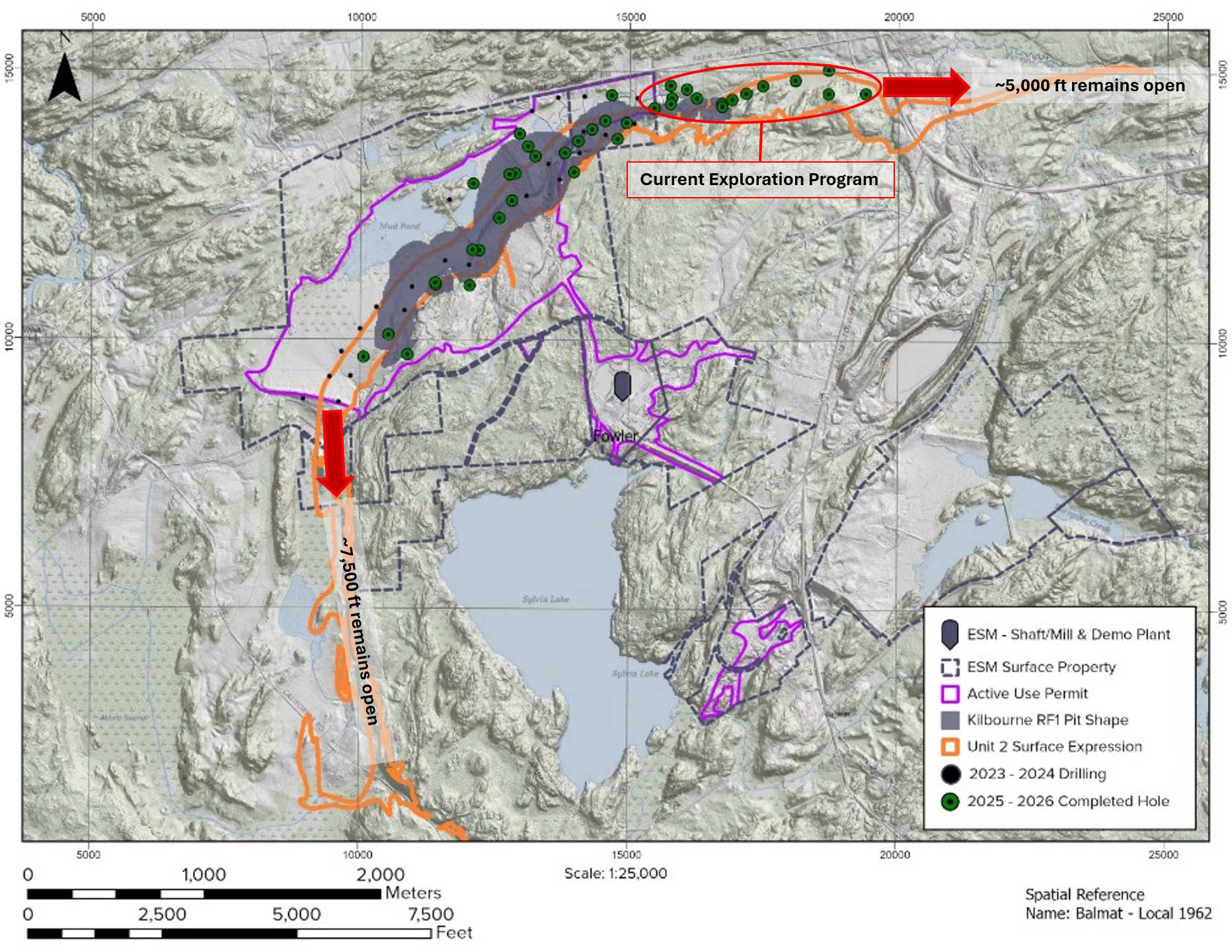
Exploration drilling on the eastern extension of Kilbourne began in Q3 2025 and ended in Q1 of 2026. The exploration phase of drilling was part of a broader drilling campaign including exploration, resource delineation and geotechnical drilling on Kilbourne and Kilboune East with a total target footage of 28,780 feet including 8,233 feet on Kilbourne East. Drilling has intercepted graphite mineralization roughly 2,500 feet from the current conceptual pit design, with mineralization remaining open approximately 5,000 feet to the east and 7,500 feet to the south. In addition, multiple regional graphite targets have been identified within the broader land package, supported by historical geological records and airborne geophysical data. The base case pricing assumptions are based on current landed U.S. prices, with no policy incentives incorporated.
Mining & Processing
Open-Pit Mining
Mining Method: Conventional drill-and-blast open-pit operation
Annual throughput: ~1.7 Mtpa
Strip ratio: 2.1:1 (LOM average)
Mine life: 13 years (initial PEA) with significant extensions expected with exploration upside
Location: Within 4,000 ft of existing ESM mill
Processing & Products
Integrated Processing Strategy:
Stage 1: Concentration
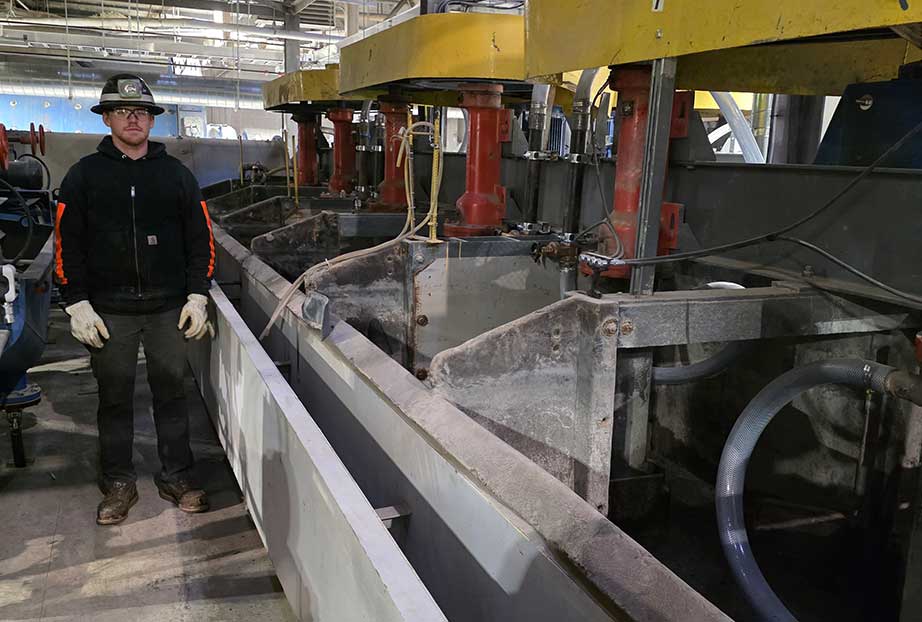
Crushing → Grinding → Flotation → Dewatering
Target grade: 95% Cg
Recovery: ~90%
Stage 2: Value-Added Products
Micronized Natural Flake Graphite (NFG): Standard industrial grade
Purified Micronized Graphite (PMG): >99.9% Cg for high-purity applications
Coated Spherical Purified Graphite (CSPG): Battery-grade anode material (post year 5)
Product Mix Evolution:
Targeted Product Mix
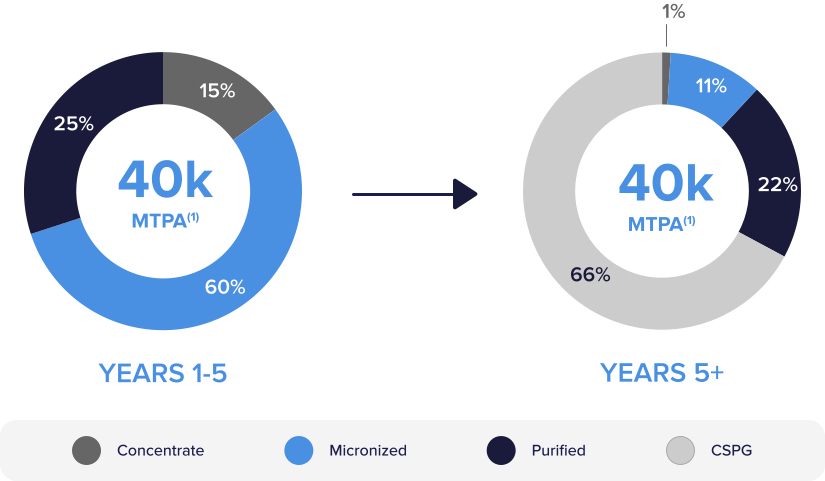
Notes:
- Subject to qualification sales
End Markets
Market Positioning:
Titan is the first U.S. natural graphite producer in 70+ years with its demonstration facility
Positioned across high-growth critical markets — defense, aerospace, energy storage, and batteries — with premium pricing potential
Product portfolio evolves from concentrate to CSPG, enabling high margins and capturing both battery and non-battery demand

Defence & Aerospace Applications
- Graphite is used in rocket nozzles, re-entry nose tips, and heat shields for its high-temperature resilience
- It’s used in composite materials for military aircraft/vehicles to boost strength, reduce weight, and improve thermal stability
| Concentrate(1) | Micronized(2) | Purified(3) | CSPG(4) |
|---|---|---|---|
| - | - |

Energy Security & Electrification
- Graphite is critical for anode and cathode use in primary and secondary batteries, including lithium-ion, lead-acid, and fuel cells, powering applications from drones and EVs to large-scale power systems
- Secure graphite supply is vital for grid storage, backup systems, and resilient infrastructure, especially for defense bases and critical networks
| Concentrate(1) | Micronized(2) | Purified(3) | CSPG(4) |
|---|---|---|---|
| - | - |

High Tech & Advanced Materials
- Graphite’s exceptional conductivity and stability under extreme conditions make it indispensable in semiconductors, silicon carbide (SiC) substrates, heat spreaders, and thermal interface materials for advanced electronics
- Enables coatings, optics, and composites in lasers, sensors, and defense-grade systems
| Concentrate(1) | Micronized(2) | Purified(3) | CSPG(4) |
|---|---|---|---|
| - | - |

Industrial & High Temperature Uses
- Refractories, foundries, and steelmaking use graphite for its heat resistance and conductive properties—critical in heavy industry and materials manufacturing
- Lubricants, coatings, and specialty applications leverage graphite’s unique chemical and thermal properties in harsh or high-wear environments
| Concentrate(1) | Micronized(2) | Purified(3) | CSPG(4) |
|---|---|---|---|
| - |
Notes:
- ATSM Mesh Grade >95% LOI
- Micronized Flake Graphite Products STD Purity 95.0% LOI MIN
- Micronized Flake Graphite Products High Purity 99.9% LOI MIN
- Coated Spherical Purified Flake Graphite (CSPG) 99.95% LOI MIN
Federal Partnership & Support
$15.8M for zinc expansion. First direct mining loan under the Make More in America initiative (“MMIA”)
Letter of Interest of $120 Million from U.S. EXIM Bank for build of Kilbourne Graphite Project
$5.5M for the Feasibility Study financing for graphite – first ever domestic study financing under MMIA (under the Engineering Multiplier Program (“EMP”))
Validates ESM’s strategic importance as a US critical materials producer and end to end support
Non-dilutive, long-term funding on attractive terms – preserves balance sheet strength while advancing critical path activities
EXIM’s indicated financing support would fund a major share of Kilbourne’s capital needs, enabling capital efficient project development
Development Timeline
Fast-Track to Production
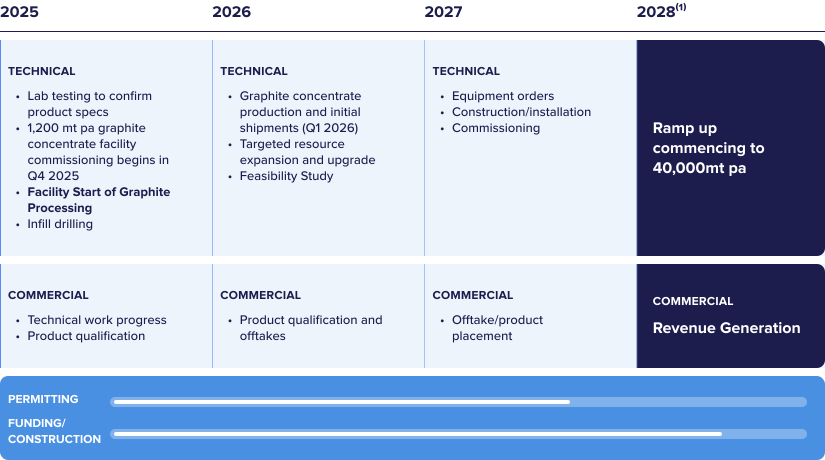
Notes:
- Commercial production decision to be based on positive results through the Company's feasibility study, permitting, development plan, board approval, and financing
Discovery to Production: ~5 years (vs. 7-10 years typical for greenfield)
Enabled by: Existing infrastructure, permits, workforce, federal support
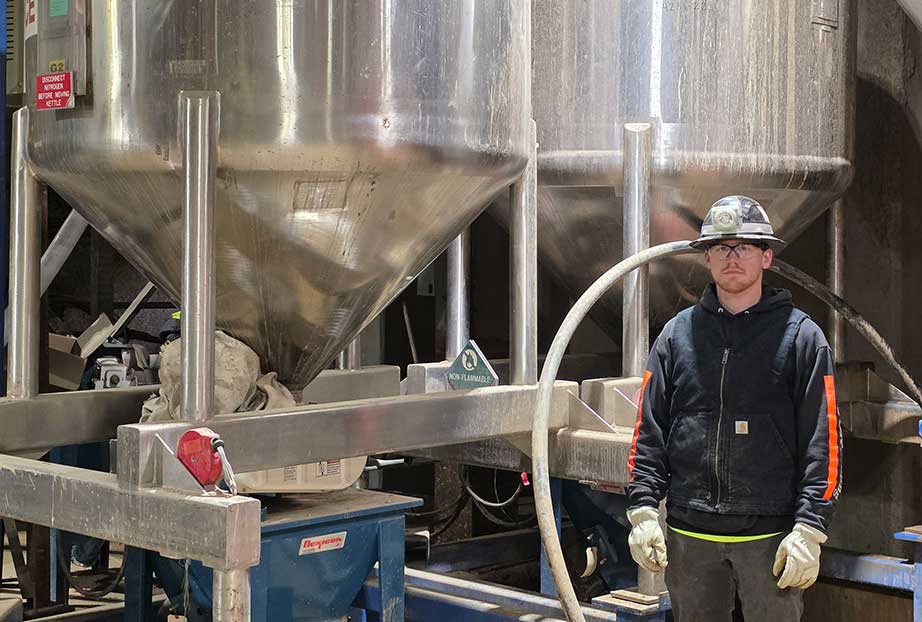
Demonstration Facility
De-Risking Commercial Development
Location: Within Empire State Mines mill complex
Status: Graphite concentrate production and initial shipments (Q1 2026)
Capacity: Current operating capacity is ~1,200 tonnes per year, with potential to ramp up
to 2,500 tonnes per year of design capacity on a two-shift basis
Objective: Customer qualification, flowsheet validation, market development
The scientific and technical information contained on this presentation was based upon the technical report titled "Empire State Mines 2025 NI 43-101 Technical Report, Gouverneur, New York, USA" which has an effective date of December 1, 2025, and which was approved by the following qualified persons: Donald R. Taylor, MSc, PG; Todd McCracken, P. Geo.; Bahareh Asi, P. Eng., David Willock, P. Eng.; Deepak Malhotra, SME Registered Member; Oliver Peters, MSc, P.Eng.; Derick de Wit, FAusIMM; and Steven M.Trader, PG, CPG, each of whom is a “Qualified Person” as defined by NI 43-101. All are independent of Titan, other than Mr. Donald Taylor, who is on Titan’s board of directors.
Technical Report
This presentation contains "forward-looking information" within the meaning of Canadian securities laws. In some cases, forward-looking information can be identified by the use of forward-looking terminology such as "plans", "targets", "expects", "isexpected", "is positioned" or "assumes", or variations of such words and phrases or state that certain actions, events or results "may", "could", "would" or "will" occur or be achieved. In addition, any statements that refer to expectations, predictions,indications, projections or other characterizations of future events or circumstances contain forward-looking information. Statements containing forward-looking information are not historical facts, but instead represent management's expectations,estimates and projections regarding future events.
Forward-looking information includes, among other things, statements relating to: estimated future payable production of zinc, costs, AISC, sustaining capital, exploration capital, and margins; all guidance; future financial or operating performanceand condition of Titan Mining Corporation (the “Company”), including its ability to continue as a going concern, and its business, operations and properties; the Company's ability to implement its growth strategy to maximize the value of its propertyholdings; the Company's planned exploration and development activities at Empire State Mines, as awell as results thereof; timing and results of project expansion, including for N2D and Turnpike; costs, timing and results of future exploration anddrilling; Company goals; forecasted trends in the global zinc and graphite market, including in respect of the price of such commodities; capital and operating cost estimates; economic analyses (including cash flow projections); the adequacy of theCompany's financial resources; the estimation of mineral resources; the realization of mineral resource estimates; the probability of inferred mineral resources being converted into measured or indicated mineral resources; the production scheduleand production estimates for the Titan’s Empire State Mines (“ESM”) zinc and graphite operations; any updates to the mine plans and continuation of the drill program at the ESM; the Company's ability to make scheduled payments of the principal, orto pay interest on or refinance its indebtedness; potential and ability to add incremental production at low cost; the ability for Kilbourne to be fast-tracked into production; that Kilbourne ever goes into production at all; that ESM becomes the firstcommercial producer of US sourced and processed graphite, or a commercial producer of graphite at all; significant resource upside; potential ability to expand mineral resources; the future development of a Kilbourne facility; production and costguidance; future exploration potential; when future LOM updates may be released; catalysts for Titan’s business; timing of a Feasibility Study for Kilbourne; the graphite development plan and indicative timeline; the ability to add incremental resourcesand production; projected zinc and graphite recoveries; that the Company will have saleable product for its graphite production at Kilbourne and key product group applications with US domestic customer base therefor; operating parameters for theFacility; strategic introduction timelines; graphite product uses, customers and ability to add to revenues and margins; potential production of 40,000 tpa of graphite; zinc and graphite demand; assumed average graphite selling price and the potentialfor premium pricing; graphite product portfolio; the potential for a long life mine; target graphite product mix; potential to add to near term production and increase in mine life through drilling of exploration targets; multiple near-term catalysts to unlocksignificant valuation re-rating; potential future financing of US$120 million from U.S. EXIM Bank for the Kilbourne Graphite Project, that this would fund a major share of Kilbourne's capital needs and enable capital efficient project development;strategic funding/policy incentive opportunities with DOE, DOW and White House; and all timelines for future plans and work.
Forward-looking information is based on opinions, assumptions and estimates made by the Company in light of its experience and perception of historical trends, current conditions and expected future developments, as well as other factors that theCompany believes are appropriate and reasonable in the circumstances, as of the date of this presentation, including, without limitation, assumptions about: equity and debt capital markets; the ability to raise any necessary additional capital onreasonable terms; future prices of zinc, graphite and other metals; the timing and results of exploration and drilling programs; the likelihood of discovering new mineral resources in the Balmat-Edwards district; the accuracy in the Company’s mostrecent technical report of the mine production schedule; the production estimates; the geology and geophysical data of ESM; metallurgical forecasts; the economic analysis, capital and operating cost estimates; the accuracy of any mineral resourceestimates; the successful integration of ESM into the Company's business; availability of labour; the accuracy of drill sample results at ESM; future currency exchange rates and interest rates; operating conditions being favourable; political andregulatory stability; the receipt of governmental and third party approvals, licenses and permits on favourable terms; obtaining required renewals for existing approvals, licenses and permits and obtaining all other required approvals, licenses andpermits on favourable terms; sustained labour stability; stability in financial and capital goods markets; availability of equipment and the condition of existing equipment being as described in the Company’s most recent technical report; the absence ofany long-term liabilities created by the mining activity in the Balmat region beyond those described in the Company’s most recent technical report; the accuracy of the Company's accounting estimates and judgments; the impact of adoption of newaccounting policies; the Company's ability to satisfy the terms and conditions of its indebtedness; and the timing of a revised mine plan for ESM. There can be no assurance that such estimates and assumptions will prove to be correct. In addition, ifany of the assumptions or estimates made by management prove to be incorrect, actual results and developments are likely to differ, and may differ materially, from those expressed or implied by the forward-looking information contained in thispresentation. Accordingly, readers of this presentation are cautioned not to place undue reliance on such information.
Forward-looking information is necessarily based on a number of the opinions, assumptions and estimates that, while considered reasonable by the Company as of the date such statements are made, are subject to known and unknown risks,uncertainties, assumptions and other factors that may cause the actual results, level of activity, performance or achievements to be materially different from those expressed or implied by such forward-looking information, including but not limited tothe following factors described in greater detail under the heading "Risks Factors" in the Company’s most recent Annual Information Form available at www.sedarplus.com: limited operating history; dependence on ESM; limited supplies, supply chaindisruptions, and inflation; requirements for additional capital in the future; financial leverage and restrictive covenants restricting our current and future operations; risks related to ramping up mining activities; inherent risks of mining; estimates ofmineral resources; production decisions based on mineral resources; uncertainty in relation to inferred mineral resources; fluctuations in demand for, and prices of, zinc and graphite; production projections and cost estimates for ESM #4 mine mayprove to be inaccurate; profitability of the Company; ability to attract and retain qualified management; title; competition; governmental regulations; market events and general economic conditions; environmental laws and regulations; threat of legalproceedings; rights, concessions and permits; social and environmental activism; land reclamation requirements; Tailings Management Facility and environmental reclamation; insurance; undisclosed liabilities; health and safety; dependence oninformation technology systems; fixed zinc pricing arrangements; conflicts of interest; risks inherent in the Company's indebtedness; risks inherent in acquisitions; integration of the mine assets; labour and employment retention/relations; anti-corruption and bribery regulation, including ESTMA reporting; infrastructure; enforceability of judgments; global outbreaks and coronavirus; absence of a market for the common shares; fluctuations in price of the common shares; loss of entireinvestment; significant ownership by Richard W. Warke; future sales of common shares by Richard W. Warke and other directors and officers of the Company; use of proceeds; payment of dividends; currency exchange rate risks; pro forma financialinformation; public company status; financial reporting and other public company requirements; dilution; and securities analysts' research or reports could impact the price of the common shares. These factors and assumptions are not intended torepresent a complete list of the factors and assumptions that could affect the Company. These factors and assumptions, however, should be considered carefully. Currency is in US dollars and tonnage is in short tons unless otherwise indicated.Other than as required by securities laws, Titan assumes no responsibility for updating the forward-looking information in this presentation.